How to Make Kombucha: A Beginners Guide
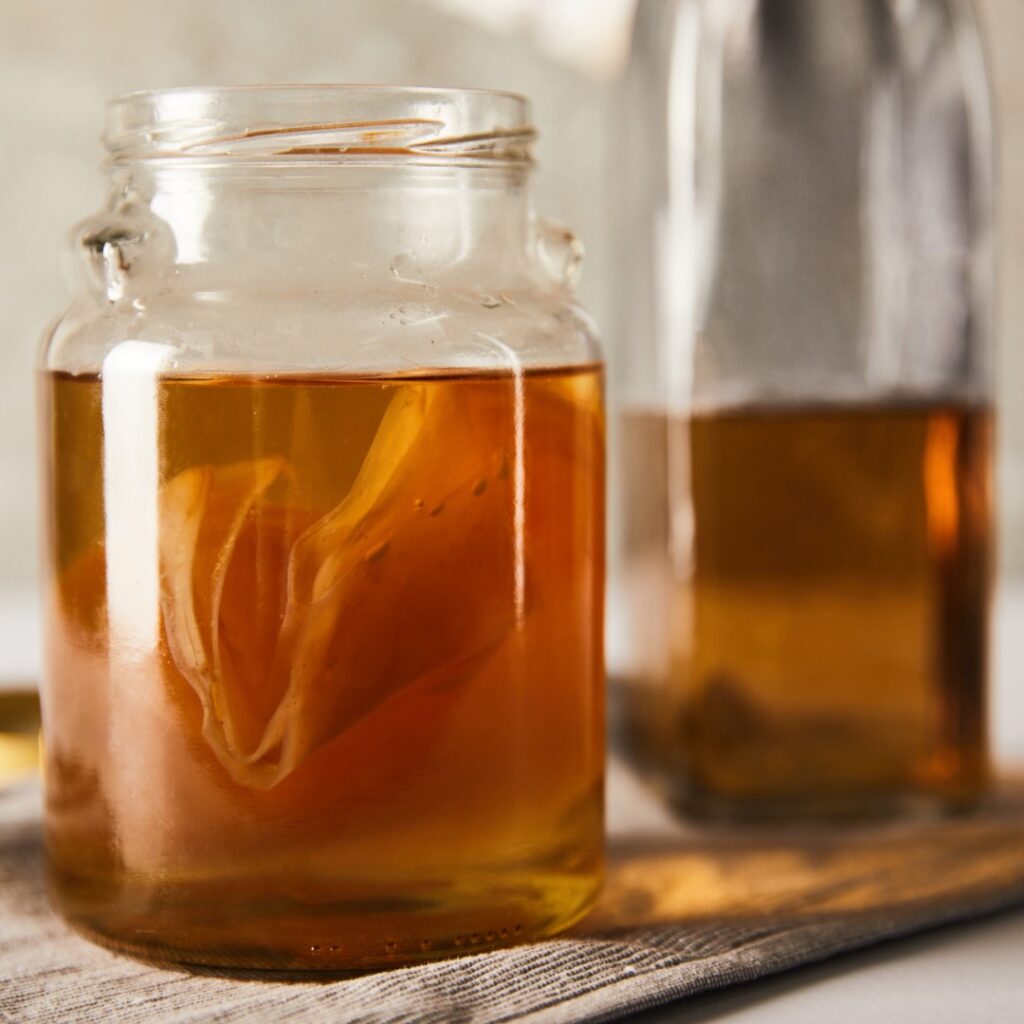
I remember the first time I tasted kombucha.
The first time I heard of it was 16 years ago at the house of my youth group leaders. After a retreat, they asked if we wanted to try a little, and I went home after telling my parents all about this drink that had something alive in it. I was mind-blown. Healthy, crunchy lifestyles were a little less common than they are today. Almost everyone you meet today has heard of kombucha. Trad wives making sourdough bread and raising backyard chickens made their stylish comeback a few years ago, and kombucha and other fermented goodies made a household name for themselves, too.
Learning Fermentation
Several months ago, some friends from our church invited me to a class on fermentation at their home.
I was so thrilled that the new trendy thing to do was spend the evening mingling and taking notes together while sampling 12 different flavors of kombucha and a dozen other fermented treats. Who knew that pampered chef parties and gathering together in living rooms disguised as an intimate event, which was actually a high-pressure sales event where you were guilted into buying into a pyramid scheme for a make-up company, would someday be replaced by an evening where you’re told to bring numerous empty jars if you wanted to bring home a SCOBY or some milk kefir grains? I was in heaven and so excited to go home with my new treasures and set up my own little fermentation station at my house.
Getting Started
I began with baby steps last year when my friend was traveling through for a visit to her home in-laws and made a pit stop at our house and asked if I wanted some of her sourdough starter. She had packed up hers for her trip to share with her mother-in-law.
I of course said yes. And after successfully keeping it alive (it was touch and go a couple of times, I’m not going to lie) for an entire year, I decided it was time to dip my toes further into this journey of nurturing of my family holistically.
Where to Get a SCOBY
If you have friends who make kombucha, ask them for some of their SCOBY! Most people who have a passion for fermenting love sharing their starters. And the best part is that they come back in abundance. When I first got my SCOBY, it was shared with lots of other people in the class I attended. Within a few weeks of making small batches, I had more than I needed! Remember, the SCOBY is alive; it’s going to keep growing! Once you start growing an abundance of your SCOBY, consider making a SCOBY Hotel!
However, if you don’t know of anyone to ask, you’re still in luck. Don’t be afraid to order a starter kit. Order everything you need to get started with one of these kombucha making kits!
Why Ferment?
Why is incorporating fermented foods into your diet something you should consider doing?
Fermented foods contain live cultures and probiotics, and consuming these fermented foods and probiotics is beneficial for several reasons:
1. Gut Health: Fermented foods and probiotics introduce beneficial, good bacteria into the gut, which can help maintain a healthy balance of gut microbiota. This balance is crucial for proper digestion, nutrient absorption, and immune function.
2. Digestive Efficiency: The live bacteria in fermented foods help break down food more efficiently, aiding in digestion and reducing symptoms of digestive disorders like bloating and constipation.
3. Immune Support: A healthy gut microbiota supports the immune system by enhancing the production of antibodies and improving the body’s ability to fend off infections.
4. Nutrient Absorption: Fermentation can increase the bioavailability of certain nutrients, making them easier for the body to absorb. For example, it can enhance the absorption of minerals like calcium and magnesium.
5. Mental Health: There is growing evidence suggesting that gut health is linked to mental health through the gut-brain axis. A balanced microbiome can positively influence mood and cognitive function.
6. Reduced Inflammation: Probiotics can help reduce inflammation in the body, which is associated with various chronic conditions, including cardiovascular diseases and metabolic syndrome.
Incorporating fermented foods like kombucha, yogurt, kefir, sauerkraut, and kimchi into your diet can be an easy and effective way to support overall health.

Flavoring Kombucha
Of all the various things I’ve learned so far, flavored kombucha has been by far the most popular with my kids. If you already have a SCOBY (symbiotic culture of bacteria and yeast), you’re halfway there, and if you’ve already been making kombucha, you’ve got this in the bag.
When making flavored kombucha, all you need to do is put your finished kombucha in a new vessel, minus the SCOBY culture and some of your starter liquid. Add fruit (fresh fruit, frozen, or even canned can be used) or fruit juice of your choosing. Though there is no longer a SCOBY in your kombucha, the fermentation will continue as the kombucha will feed off of the sugar from the fruit. Don’t forget to burp (or open your bottle) every day to release the pressure building up inside the glass bottles.
Fruit Flies
Something I was not expecting (but probably should have foreseen) was the fruit flies! As soon as I began fermenting, especially kombucha, they were everywhere but especially covering the tea towel that was covering my gallon jar. They couldn’t get in because of the tight weave of the towel and the coffee filters I used under the towel, so my kombucha was safe, but they were driving me insane! Luckily the solution was pretty simple.
Take a small glass jar and put a small amount of kombucha in it. Add a little bit of dish soap (optional) and cover with plastic wrap or tinfoil. Poke holes in the plastic wrap or tinfoil and leave it right next to your brewing kombucha. The fruit flies will find their way into the small glass jar and get trapped inside. Replace liquid as needed.

Kombucha Tea
One-Quarter Batch:
1 1/2 teaspoons loose-leaf tea OR 2 tea bags
1/4 cup sugar
2-3 cups of water
1/2 cup starter tea or vinegar
Half-Gallon Batch:
1 Tablespoon loose-leaf tea OR 4 tea bags
1/2 cup of sugar
6-7 cups of water
1 Cup starter tea or vinegar
Gallon Batch:
2 Tablespoons loose-leaf tea OR 8 tea bags
1 cup sugar
13-14 cups of water
2 cups starter tea or vinegar
Instructions:
Combine hot water and sugar in a glass brewing jar. Stir until the sugar dissolves. Place the tea bags in the sugar water to steep. Cool the mixture to 68-85 degrees Fahrenheit. You do not want to put your SCOBY into your sweetened tea until after it is room temperature, or you could kill the living culture of the SCOBY. The tea may be left in the liquid as it cools or removed after the first 15 minutes. The longer the tea is left in the liquid, the stronger the tea will be.
Remove the tea bags or completely strain the loose tea leaves from the liquid.
Add starter tea from the previous batch to the liquid. If you do not have starter tea, distilled white vinegar may be substituted.
Add an active kombucha SCOBY.
Cover the jar with a tight-weave towel or a coffee filter and secure with a rubber band.
Allow the mixture to sit undisturbed at 68-85 degrees Fahrenheit, in a dark place out of direct sunlight, for 7-30 days or to taste.
The longer the kombucha ferments, the less sweet and more vinegary it will taste.
Pour kombucha off the top of the liquid from the jar for consuming. Retain the SCOBY and enough liquid from the bottom of the jar to use as starter tea for the next batch.
The finished kombucha can be flavored and bottled in a second fermentation, if desired, or enjoyed plain!

Notes
1 1/2 teaspoons loose-leaf tea OR 2 tea bags
1/4 cup sugar
2-3 cups of water
1/2 cup starter tea or vinegar
Half-Gallon Batch:
1 Tablespoon loose-leaf tea OR 4 tea bags
1/2 cup of sugar
6-7 cups of water
1 Cup starter tea or vinegar Gallon Batch:
2 Tablespoons loose-leaf tea OR 8 tea bags
1 cup sugar
13-14 cups of water
2 cups starter tea or vinegar Instructions: Combine hot water and sugar in a glass brewing jar. Stir until the sugar dissolves. Place the tea bags in the sugar water to steep. Cool the mixture to 68-85 degrees Fahrenheit. You do not want to put your SCOBY into your sweetened tea until after it is room temperature, or you could kill the living culture of the SCOBY. The tea may be left in the liquid as it cools or removed after the first 15 minutes. The longer the tea is left in the liquid, the stronger the tea will be.
Remove the tea bags or completely strain the loose tea leaves from the liquid.
Add starter tea from the previous batch to the liquid. If you do not have starter tea, distilled white vinegar may be substituted.
Add an active kombucha SCOBY.
Cover the jar with a tight-weave towel or a coffee filter and secure with a rubber band.
Allow the mixture to sit undisturbed at 68-85 degrees Fahrenheit, in a dark place out of direct sunlight, for 7-30 days or to taste.
The longer the kombucha ferments, the less sweet and more vinegary it will taste.
Pour kombucha off the top of the liquid from the jar for consuming. Retain the SCOBY and enough liquid from the bottom of the jar to use as starter tea for the next batch.
The finished kombucha can be flavored and bottled in a second fermentation, if desired, or enjoyed plain!
End Notes
Note: If you are used to store-bought kombucha and enjoy the taste, consider doing a longer first fermentation and/or secondary fermentation. Store bought kombucha in my opinion has a very vinegary taste as opposed to homemade kombucha, which can be achieved by a longer fermentation process. A shorter first fermentation (7 days) is my personal preference and tastes much more like sweet tea.
Disclaimer: All kombucha may contain a small amount of alcohol due to the fermentation process.
Find more recopies in We Fast and We Feast
Emma Williams
Catholic Wife, Homemaker and Homeschooling Mother of Five, exploring and experiencing life’s goodness through living holistically and romantically.