“The Truth Will Make You Odd”: Flannery O’Connor and the Catholic in Today’s World
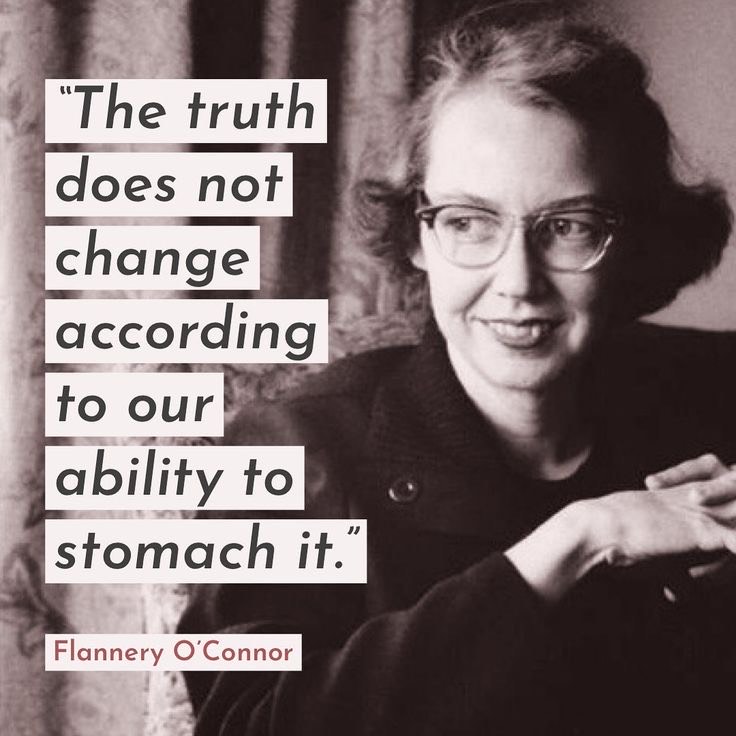
Flannery O’Connor had a knack for unsettling observations. Her statement, “You shall know the truth, and the truth shall make you odd,” isn’t just witty; it’s a theological punch to the gut. For Catholics living in the modern world, it’s also a lifeline.

Today, “odd” is not the goal. We live in an age that prizes fitting in, being relevant, and going with the flow. To be odd—really odd—is to be suspect. Yet, in O’Connor’s vision, this oddness is not a social mishap; it’s a sign of spiritual health. So, what does it mean to be truthfully, faithfully odd in a world that values sameness?
Oddness: The Mark of the Believer
Modern society tells us to craft our own truth. Personal experience becomes the highest authority, feelings the final judge. In this world, the Catholic claim to a universal truth—that Christ is King, that the Church holds the keys to eternal life—feels, at best, outdated and, at worst, intolerant. We are not our own light, O’Connor would say, and this is a profoundly odd thing to believe.
To hold to truth in this environment is to be a living contradiction. It means rejecting the comfortable idea that all paths are equal, that morality is fluid, that faith is a private affair. It means standing firm when the world asks us to bend. And this steadfastness makes us strange. Not rude, not self-righteous—just undeniably different.
The Oddness of the Cross
O’Connor’s characters rarely find grace in comfortable places. They meet it through violence, loss, and shocking moments of revelation. The truth is rarely soft in her stories, because the cross is not soft. The world wants a truth that soothes, but the Catholic faith offers a truth that saves. And salvation is messy.
To embrace this truth is to embrace a way of life that looks foolish to the world. It means accepting suffering as redemptive, seeing sin as a real danger, and believing in a God who died on a cross. It means raising children to understand sacrifice, in a world that tells them they deserve everything. It means prioritizing eternal rewards over immediate gratification. None of this will win us popularity points. It will, however, make us saints—or at least put us on the right path.
Odd Families, Holy Families
In a culture obsessed with self-expression, the Catholic family stands as a radical witness. We are called to be odd in the way we live, the values we hold, and the stories we tell our children. The family that prays the rosary together, that goes to Mass on Sunday instead of soccer practice, that teaches virtue instead of moral relativism—this family is a sign of contradiction.
And contradiction is uncomfortable. Your kids might complain. Your neighbors might raise an eyebrow. But O’Connor would remind us that comfort is not the goal. Holiness is. And holiness is always, in some way, odd.
“The Operation of Grace is Always Costly”
O’Connor understood that grace often comes through discomfort. The operation of grace is always costly because it demands change. To live as a Catholic today is to invite this costly grace into our lives, knowing that it will set us apart. It means being willing to look foolish for the sake of truth. It means being the family that says no when everyone else says yes, the one that stands firm when everyone else wavers.
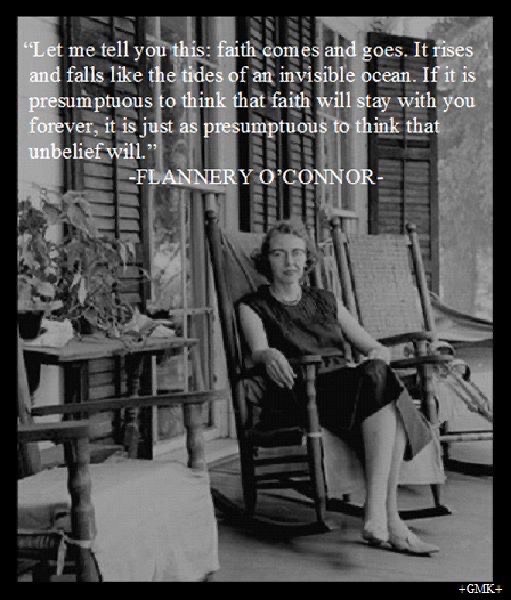
O’Connor once said, “When you can assume that your audience holds the same beliefs you do, you can relax a little. When you have to assume that it does not, then you have to make your vision apparent by shock—to the hard of hearing you shout, and for the almost-blind you draw large and startling figures.”
As Catholics, we are those startling figures. We don’t fit neatly into the world’s categories. We believe in unseen realities, in absolute truths, in a God who became man and suffered for our sins. This makes us odd. And that’s exactly as it should be.
Oddness as a Vocation
To be odd is not to be isolated. It is to be set apart, yes, but for a purpose. Our oddness is a form of witness. It is a quiet (or sometimes loud) refusal to conform to a world that has forgotten the face of God. It is an invitation to others, a sign that there is another way—a way that leads to life.
O’Connor’s odd characters are never odd for their own sake. Their oddness points to something beyond themselves. So too with us. Our lives, our families, our choices—they are meant to point to Christ. The truth will make you odd, but it will also make you free.
Embrace the Oddness
So, let’s embrace the oddness. Let’s be the family that confuses the world, the parents who raise eyebrows, the Catholics who refuse to blend in. Let’s remember that our faith is not meant to make us comfortable; it’s meant to make us holy.
Flannery O’Connor knew this well. She lived in a world that didn’t understand her faith, and she didn’t expect it to. She didn’t water down the truth to make it more palatable. Neither should we.
Because in the end, it’s not about fitting in. It’s about standing out—for the right reasons, and for the right truth. The world might call us odd. But we know better. We know the truth. And the truth, as strange as it might seem, will set us free.
Never read anything by Flannery O’Conner? Grab your first read secondhand at thriftbooks!
AMDG,
Emma Williams
Catholic wife and homeschooling mother, artist and storyteller. Romanticizing everything. Living (somewhat) holistically and liturgically within the walls of our little domestic monastery.
Read more at The Odd-Lot Social Club
 | ReplyForwardAdd reaction |