Domestic Monastery by Ronald Rolheiser: Book Review

This post contains affiliate links, which means I make a small commission at no extra cost to you.
What is a Domestic Monastery?
“What is a monastery? A monastery is not so much a place set apart for monks and nuns as it is a place set apart. Period.” Mic drop.
Ronald Rolheiser’s Domestic Monastery gives us a down-to-earth look at what family life can look like by embracing monastery life within the walls of our home. His bite-sized but powerful chapters are, not to be overly dramatic, life-changing. I could never recommend this easy read from Paraclete Press enough to do it justice.
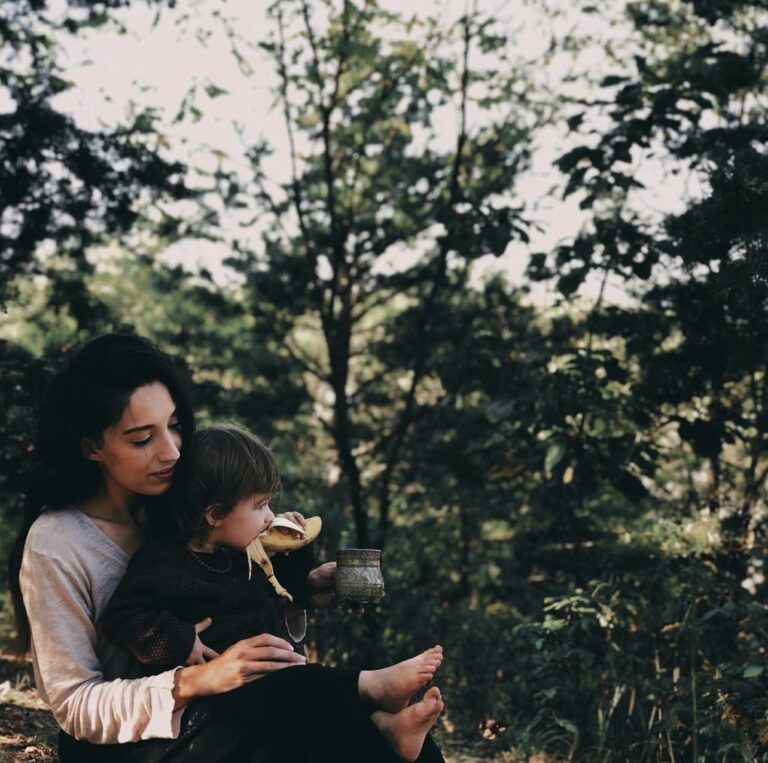
Some time ago, I couldn’t put my finger on what exactly started the stir inside of me, but I began a longing for a monastic life within the walls of our own home. The idea felt counterintuitive to our loud and rambunctious growing family of six, soon to be seven. My parenting journey, and in particular the chapter I was living in with many small children, seemed anything but monastic.
Your Home is a Sanctuary
“There’s a rich spirituality in these principles: Stay inside your commitments, be faithful, your place of work is a seminary, your work is a sacrament, your family is a monastery, your home is a sanctuary. Stay inside them, don’t betray them, learn what they are teaching you without constantly looking for life elsewhere and without constantly believing that God is elsewhere.”
I got chills reading that. There is something so wonderful about stumbling upon someone’s writing that you had thought of before but failed to sum up in words.
With this concept in mind, I began referring to our home as a ‘foxhole.’
When I think of a foxhole, two images come to mind. The first is a cozy den—a safe, warm, and peaceful home. Somewhere, babies are born, and little ones are raised. If you look up a foxhole in the Oxford Dictionary, the first definition is just that, but in simpler terms and fewer words.
Foxhole
Noun
- The den or burrow of a fox
The second definition takes it to a whole new level:
2. A hole in the ground used by troops as a shelter against enemy fire or as a firing point.
We are the church militant, and we are raising the next generation of soldiers.
Spiritual warfare is all around us.
Our job is to take it seriously, combat it, protect our families, and prepare them for when the torch will inevitably pass on to them. As parents, we always walk a fine line, protecting our children from the world while preparing them for when they enter it. The life of a parent is not for the faint of heart. Our home is our foxhole. Our Foxhole is our Domestic Monastery.

The Monastic Bell
In Domestic Monastery, Rolheiser speaks about the ‘monastic bell’ and the importance of ritual and rhythm in and outside the monastery walls. I have struggled to implement this idea in our daily lives, trying to gather the children together at noon for the Angelus and at three for the Chaplet of Devine Mercy to establish a feeling of a domestic monastery in our home. I have timers going off at numerous times of the day, and whenever my little five-year-old Flannery hears one go off, she always looks at me and asks two things.
“Is it time for the long one or the short one?”
And “Can we sing it this time?”
Singing the Chaplet is her favorite, and I try to do it when we can, but it seriously feels like it takes ten times longer, and some days don’t feel as accommodating, but I love her joy and zeal for sung prayer!
Trying to incorporate the monastic life into our domestic life felt necessary, and having Rolheiser put it into words was like drinking water in the desert. Rolheiser speaks of the importance of time not being our own, that when the Monastic Bell rings, it is a reminder to drop whatever we are doing to move on to the next thing because our time ultimately doesn’t belong to us but only to God, and the sacredness of time maintains its sacredness because it belongs to Him. The idea of the Monastic Bell translates differently to a parent of young children than to those in religious life, but the importance remains the same.
Where is our Cell?
Parenthood and married life can feel so ‘of the world sometimes’, and there have been times while washing a sink full of dishes, heaps of laundry needing to be done around me, and cranky children tugging on my legs only for me to throw in the towel and put everyone to bed including myself, the house still in shambles. And I can’t help but envy, ever so slightly, the life of the monastic. Quietly able to speak to our Lord, needing so few belongings in life that they do not need to spend hours and hours every day cleaning up after small children. In those moments, I have longed to, like the monastic, go to their cell.
Remember when you were little, and your parents would send you to timeout, and it felt like the worst punishment in the world? Now, as an adult, I sometimes wish to cash in on every moment of solitude I resented as a child!
Sometimes, I want to put myself into timeout or go to my cell. That may be why this beautiful little book Ronald Rolheiser wrote meant so much to me. In one of my favorite passages, he writes:
“Cell, as referred to here, is a metaphor, an image, a place inside life, rather than someone’s private bedroom. Cell refers to duty, vocation, and commitment. In essence, this is what’s being said: Go to your cell, and your cell will teach you everything you need to know: Stay inside your vocation, inside your commitments, inside your legitimate conscriptive duties, inside your church, inside your family, and they will teach you where life is found and what love means. Be faithful to your commitments, and what you are ultimately looking for will be found there.”

Drawing Closer to The Father
Ronald Rolheiser draws upon the wisdom of Dr. Wendy Wright, a mother, and theologian he once heard speak at a conference. He recounted Dr. Wright, saying, “Becoming a parent, submits Dr. Wright, reshapes the heart in a unique way, molding it more and more to be compassionate as God is compassionate.”
Just as humility sometimes feels like the lowest of all virtues, when we truly embrace it, it can feel like being run down into the dirt, but in reality, it is the virtue that emulates Christ.
Matthew 11:29 Take my yoke upon you and learn from me, for I am meek and humble of heart; and you will find rest for yourselves.
In the same way, humility makes us more Christlike, could parenthood in all its tedious forms draw us closer to God the Father?
A Different Type of Currency
Though the vocations of monastic men and women seem like a surefire way to heaven, married life and parenthood provide a special kind of opportunity that does not come from the monastic cell and may only be found in the domestic monastery.
Parenthood and marriage bring about an abundance of blessings of powerlessness. We know what we are signing up for in a very broad sense when we get married. The usual, for better or for worse, for sickness and in health, but we still cling to an idyllic dream of white picket fences, or whatever your particular brand of that might be.
When the religious Brother or Sister enters the monastery, they are signing up for something that requires a crazy amount of sacrifice right up front. To give up everything, taking vows such as poverty, chastity, and obedience depending on their order. And then, lives abundantly fruitful follows. There is a stability there.
But as humans out in the world, living family lives, the seasons of our lives ebb and flow so violently at times that the spirituality of parenting feels like it requires less of an upfront payment but a very, very steep interest rate that we pay in spades shortly later. Whether we pay upfront like the monastics or heavily in interest, that payment, if paid humbly, is our currency that buys us a ticket to heaven.

Sainthood is a Universal Vocation
When we think of sainthood, it is easy to immediately think of martyrs being burned at the stake, hermits in the desert, or those who have received Marian apparitions. But those are the exceptions. Perhaps the ones whose place in heaven will be highest are the ones who have received Marian apparitions, but the truth is that every single one of us had a vocation and a calling to sainthood.
You, me, him, her, all of those guys over there, even the person you like the least in the whole wide world, all of us have that same calling.
And we find it wherever we are. We can pick up the crosses that Our Lord puts in front of us on a daily basis.
And maybe for a very few, that looks like martyrdom, but for the great majority, those crosses come in the forms of diapers needing changing, sinks full of dishes, and dirty little cherub hands reaching up to us to be held when we are almost too tired to stand. This is our beautiful little Calvary, our very own Domestic Monastery.
Practical Ways to Make Your Home a Domestic Monastery
- Read Domestic Monastery by Ronald Rolheiser.
- Add Catholic Art and Crucifixes to each room of your home (my favorite crucifix for hanging over doorways.)
- Wear a Brown Scapular (and have everyone in your family wear one too!) The brown scapular is the lay person’s habit.
- Buy a ‘Monastic Bell’ to ring at prayer time or set alarms on your phone.
- Decide on what prayers to pray yourself and what prayers to pray as a family every day and pick specific times they will be prayed at.
- Light candles especially during prayer time. Candles always make moments seem more sacred and helps remind my littles ones that we are taking time for Jesus. Chrism Beeswax Candles make the moment feel especially sacred.
- Remind yourself and everyone in the home, that everything you do can be a gift to God. Be a cheerful monastery!
Ronald Rolheiser, OMI, the author of Domestic Monastery, is a specialist in the fields of spirituality and systematic theology. His regular column in the Catholic Herald is featured in newspapers in five different countries. He is the author of many books, including bestsellers such as The Holy Longing, Sacred Fire, also The Restless Heart, Forgotten Among the Lilies, and Bruised and Wounded.
AMDG
Emma Williams
Catholic wife and homeschooling mother of 5.
Catechesis of the Good Shepherd Level I Instructor.
Living life intentionally and cultivating a life of deep connection for my family through liturgical living.
Read more about Foxhole Fable here.